Geography & Location
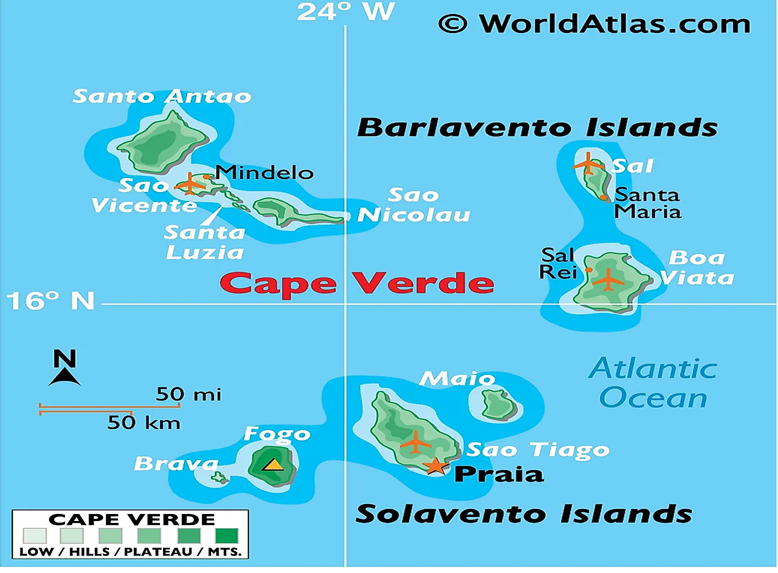
Image: WorldAtlas.com
Sal Island is located in the Cape Verde archipelago, approximately 350 miles (560 km) off the west coast of Africa in the Atlantic Ocean (Wikipedia, 2025). As one of the three sandy eastern islands, Sal is relatively flat with its highest point being Monte Grande at 406 meters elevation (Cape Verde, 2023).
The island measures 29.7 km in length and 11.8 km in width, covering an area of 216 square kilometers (Wikipedia, 2025). Its strategic location has made it an important transportation hub, home to Amílcar Cabral International Airport, the busiest airport in Cape Verde.
Key Geographic Features:
- White sandy beaches along the coastline
- Volcanic landscapes and lunar-like terrain
- Salt marshes in Pedra de Lume crater (Cape Verde Islands, 2025)
- Uninhabited islet Ilhéu Rabo de Junco off the west coast (Wikipedia, 2025)
Sources: Cape Verde (2023); Cape Verde Islands (2025); Wikipedia (2025)
Climate & Weather
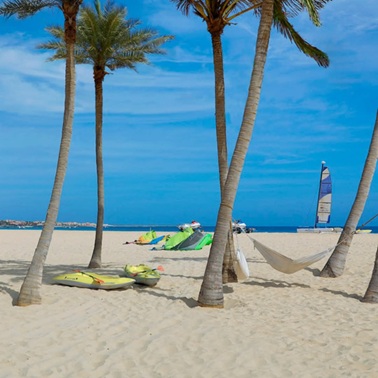
Image: My Galery
Sal Island enjoys a tropical dry climate with average temperatures of 26°C throughout the year. The island boasts over 350 days of sunshine annually, making it one of the most reliable sun destinations in the world (Cape Verde Islands, 2025).
The climate is influenced by the Saharan winds and Atlantic trade winds, which help maintain comfortable temperatures even during the warmest months (Visit Cape Verde, 2025). Rainfall is minimal and occurs primarily between July and October, though precipitation remains low even during the rainy season (Wikipedia, 2025).
Climate Highlights:
- Average annual temperature: 26°C (79°F) (Cape Verde Islands, 2025)
- Sea temperature: 23-27°C year-round (Visit Cape Verde, 2025)
- Consistent northeast trade winds perfect for water sports (TUI UK, 2025)
- Low humidity throughout the year (Wikipedia, 2025)
Sources: Cape Verde Islands (2025); TUI UK (2025); Visit Cape Verde (2025); Wikipedia (2025)
History & Heritage
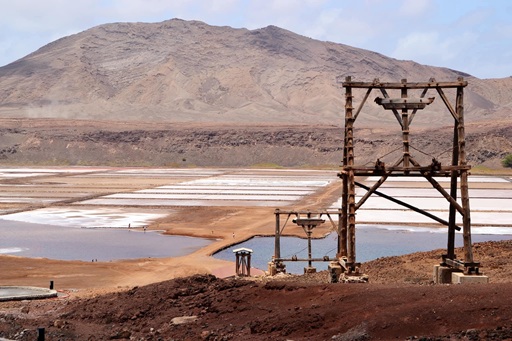
Image: My Galery
Sal Island was discovered by Portuguese explorers on December 3, 1460, and was initially named "Llana" meaning "flat" (Wikipedia, 2025). The island remained sparsely inhabited for the first three centuries following its discovery, with only a small fishing village near present-day Palmeira existing in 1720 (Wikipedia, 2025).
The island's destiny changed dramatically with the development of the salt industry in the late 18th century. The discovery of two large salt ponds at Pedra de Lume and Santa Maria transformed Sal into an important salt production center (Ilha do Sal Official, 2023). At its peak, the island exported 30,000 tons of salt annually, primarily to Brazil (Wikipedia, 2025).
Santa Maria was founded in 1830 by Manuel António Martins specifically to support the salt trade. The industry thrived until its nationalization in 1887, after which Portuguese and French investors resumed production until 1984 (Cape Verde, 2023).
In the 20th century, Sal's importance shifted from salt to aviation. Italy began constructing an airport in 1939 to facilitate flights between Europe and South America, though construction halted during World War II. The Portuguese completed the airport in 1949, establishing Sal as a crucial refueling stop for transatlantic flights (Wikipedia, 2025).
Today, tourism has replaced salt and aviation as the island's primary economic driver, with Santa Maria developing into a vibrant resort destination while maintaining its cultural heritage (Visit Cape Verde, 2025).
Sources: Cape Verde (2023); Ilha do Sal Official (2023); Visit Cape Verde (2025); Wikipedia (2025)
Culture & Local Life
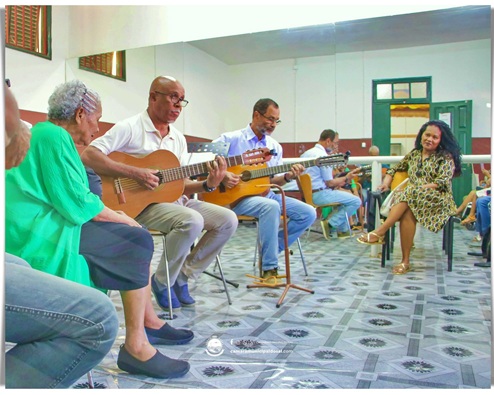
Image: My Galery
Cape Verdean culture is a unique blend of African and Portuguese influences, enriched by Brazilian and Caribbean elements. This cultural fusion is evident in the island's music, language, cuisine, and way of life (Visit Cape Verde, 2025).
Morabeza - The Cape Verdean Spirit
The concept of "morabeza" embodies the warm hospitality and welcoming nature of Cape Verdean people. This spirit of friendship and community is expressed in the local saying "na nôs tera, nôs tudo ê família" - "In our land, we are all family" (Visit Cape Verde, 2025).
Music & Dance
Music is the soul of Cape Verde, with genres like morna, coladeira, and funaná forming the soundtrack of island life. The island has produced internationally renowned artists, and live music is a regular feature at local venues and festivals (Sal Experiences, 2022).
Language
While Portuguese is the official language, locals speak Crioulo (Cape Verdean Creole), a vibrant dialect that varies slightly between islands. English is widely understood in tourist areas (Cape Verde Islands, 2025).
Cuisine
Cape Verdean cuisine reflects the island's history and culture, featuring fresh seafood, cachupa (the national dish), grogue (local rum), and unique flavors influenced by African, Portuguese, and Brazilian cooking traditions (TUI UK, 2025).
Sources: Cape Verde Islands (2025); Sal Experiences (2022); TUI UK (2025); Visit Cape Verde (2025)
Island Facts & Figures
Population
Approximately 40,000 residents, making Sal the third most populous island in Cape Verde after Santiago and São Vicente (Wikipedia, 2025).
Source: Wikipedia (2025)
Main Towns
Espargos: The capital city
Santa Maria: Main tourist hub
Palmeira: Main port town (Cape Verde, 2023)
Source: Cape Verde (2023)
Economy
Tourism is the primary economic driver, accounting for 48.2% of Cape Verde's total tourist accommodation capacity (Wikipedia, 2025). The island has among the best living standards in the archipelago.
Source: Wikipedia (2025)
Transportation
Amílcar Cabral International Airport connects Sal to Europe, Africa, and the Americas, making it the main gateway to Cape Verde (Wikipedia, 2025).
Source: Wikipedia (2025)